
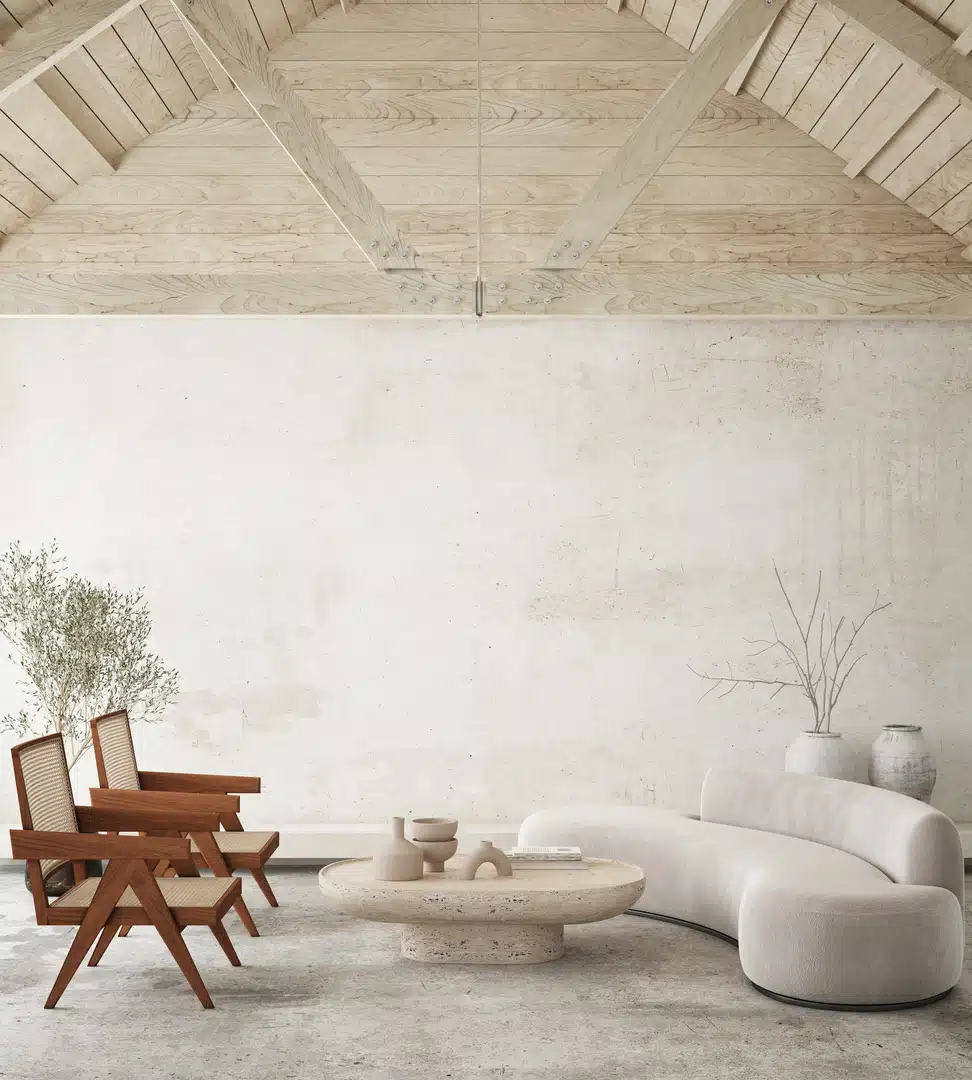
In the historic neighborhoods of Mission Hills and the sun-drenched estates of Hallbrook, homeowners are increasingly moving away from the “plastic” look of modern finishes. There is a growing desire for something with soul—a finish that doesn’t just sit on a wall, but lives with it.
If you’ve been scrolling through design galleries or walking through the newly renovated boutiques in the Country Club Plaza, you’ve likely seen it: a soft, mottled, suede-like texture that seems to glow from within. This is limewash.
But is this “living finish” a practical choice for your Kansas City home, or should you stick with the reliable performance of traditional premium acrylics? At Bates Painting, we believe the best decision starts with understanding the craft, the chemistry, and the aesthetic legacy of this unique medium.
Whether you choose a mineral-based patina or a high-durability finish, our professional interior painting services are designed to marry long-term protection with Doug’s signature artist-led approach.
Book Your Limewash Consultation
The Timeless History of a Mineral Masterpiece
Limewash is not a new trend; it is a return to form. For thousands of years, from the villas of the Mediterranean to the grand manors of Europe, limewash was the standard. It fell out of favor during the mid-20th century as chemical-based latex paints offered a “perfectly” uniform, wipeable surface that matched the industrial aesthetic of the time.
However, as we move through 2026, the design pendulum in Kansas City is swinging back toward natural materials. Our clients in the Rockhill district and Sunset Hill are looking for finishes that honor the history of their homes. Limewash provides a bridge between the old and the new, offering a mineral-based purity that synthetic paints simply cannot replicate.
What Exactly is a “Living Finish”?
Traditional paint is a film. Whether it’s a high-end matte or a durable satin, it’s essentially a thin layer of resin and pigment that seals the surface of your drywall or masonry. It is designed to be static—to look exactly the same on day one as it does on day 1,001.
Limewash is fundamentally different. Made from crushed, fired, and “slaked” limestone mixed with water and natural pigments, it doesn’t form a film. Instead, it sinks into the surface and undergoes a chemical reaction called carbonation. It essentially turns back into stone on your wall.
We call it a “living finish” because it is porous and reactive. It patinas. It handles light differently throughout the day. In a Sunset Hill manor with large, south-facing windows, a limewashed room will look like a different space at dawn than it does at dusk, shifting with the Kansas City sun. It absorbs light rather than reflecting it, creating a soft, velvet-like glow that makes even the most minimalist room feel warm and inhabited.
The Aesthetic: Movement vs. Uniformity
The primary reason our clients in areas like Loch Lloyd or Briarcliff West choose limewash is the texture.
- Traditional Paint: Offers a crisp, uniform, and clean look. It’s the perfect backdrop for modern art or when you want the architecture of the room (like intricate crown molding) to do the talking. It provides a “flat” consistency that many modern homeowners find comforting and predictable.
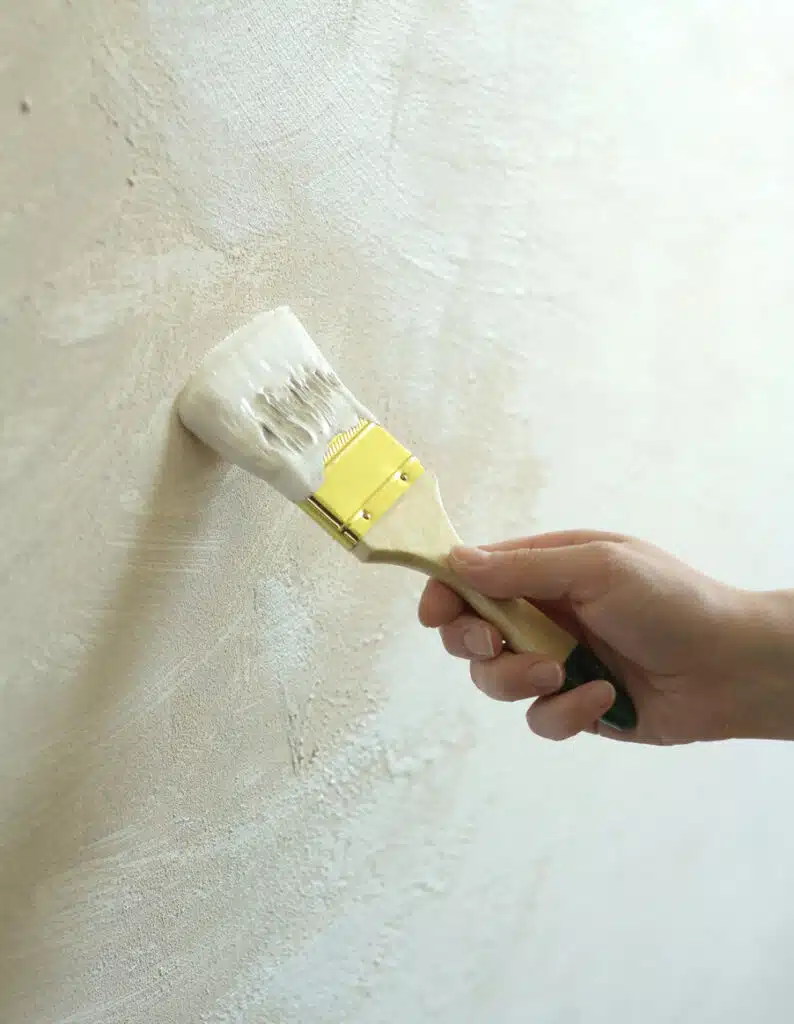
- Limewash: Offers “movement.” Because it’s applied with a specialized masonry brush in random, overlapping strokes, it creates a cloudy, mottled effect. It adds an instant sense of history and “weight” to a room, making a new build in Leawood feel like a centuries-old European villa. The “mottling” isn’t a defect; it’s the point. It creates a visual depth that masks minor imperfections in the wall while providing a sophisticated, artisanal atmosphere.
The Health and Breathability Factor: A Kansas City Essential
Kansas City summers are famously humid. This is where the science of limewash truly shines and where traditional paint can sometimes struggle.
Traditional paints seal moisture in. If you have an older brick home or a basement in a historic district, sealing those walls with modern paint can sometimes trap moisture behind the paint film. Over time, this leads to bubbling, peeling, or even structural degradation as the moisture tries to escape.
Limewash is breathable. It allows water vapor to pass through it, which helps regulate indoor humidity and prevents the “stuffy” feeling some synthetic paints can create. Furthermore, limewash is naturally high-alkaline (pH 12+), making it a natural fungicide. It’s hypoallergenic, zero-VOC, and carbon-neutral—often making it the healthiest choice for bedrooms, nurseries, and kitchens. For the health-conscious homeowner in Brookside, it’s the ultimate “clean” home upgrade.
The Exterior Advantage: Curb Appeal for Your Home
While many homeowners first discover limewash for their interiors, its application on exterior brick is a game-changer for curb appeal. Many of the stately brick homes in the Northland or near Ward Parkway have a heavy, dark presence. Limewash allows you to lighten the appearance of your home without the maintenance nightmare of traditional exterior paint.
When you paint brick with latex, you are essentially shrink-wrapping your house. If that paint fails, it peels off in unsightly strips. Limewash, however, calcifies into the brick. It won’t peel, chip, or flake. Instead, it slowly weathers over decades, giving your home a timeless, “settled” look that only gets better with age. As May brings the perfect painting weather to the Midwest, now is the ideal time to consider an exterior transformation that won’t require a total repaint in five years.
Durability and Maintenance: The Professional Perspective
This is the section where we have the most honest conversations with our clients. Limewash is a luxury finish, and like any luxury material (think marble or raw silk), it requires a different mindset regarding maintenance.
Traditional Paint is “Wipeable.” If you have a high-traffic mudroom or a kitchen where spaghetti sauce is a frequent flyer, a high-quality traditional enamel is your best friend. You can scrub it, wipe it, and go about your day.
Limewash is “Porous.” Because it is essentially thin stone, it absorbs oils from fingerprints or splashes. While you can’t easily “scrub” limewash without changing its texture, it is incredibly easy to refresh. Unlike traditional paint, which requires sanding and priming to fix a scuff, limewash can often be touched up by simply brushing on a new diluted layer. It blends into itself seamlessly.
For our clients who want the look in high-traffic areas, we often suggest a specialized mineral sealer. This sealer protects the finish from stains without sacrificing the matte, “cloudy” aesthetic that makes limewash so desirable.
The Art of Application: Why the “Who” Matters
You can find limewash kits at boutique hardware stores, but achieving the high-end look seen in Architectural Digest is notoriously difficult for a DIYer. Limewash is a temperamental medium that requires a deep understanding of suction, evaporation, and brushwork.
Limewash dries significantly lighter than it looks when wet—sometimes up to 50% lighter. This makes “cutting in” around windows and ceilings a high-stakes endeavor. It also requires a “wet-on-wet” technique. If a painter stops in the middle of a wall to take a phone call, the edge of the paint will dry. When they start again, a permanent “lap mark” or dark line will form where the dry and wet edges met.
When the Bates Painting team approaches a limewash project in a home near Loose Park, we treat it as an art installation. We manage the “open time” of the product, ensuring the mottling is soft and intentional rather than streaky and accidental. We use specific “criss-cross” or “fresco” strokes to build up the depth of the finish, layer by layer.
Color Trends: From “Cachi” to “Aged Stone”
In Kansas City right now, we are seeing a shift away from cold, blue-toned grays toward warmer, earthier neutrals. In the grand dining rooms of Mission Hills, “dirty whites” and “sun-baked tans” are the colors of choice. These tones work beautifully with limewash because the mineral pigments used are derived from the earth itself.
Whether it’s a muted sage that brings the lush greenery of the surrounding parks inside, or a warm terracotta that mimics a Mediterranean sunset, limewash colors have a vibrancy and depth that synthetic pigments simply cannot match. They don’t look like a color on a wall; they look like the color of the wall.
The Verdict: Which is Right for Your Kansas City Home?
Choose Traditional Paint if:
- You want a specific, exact color match to your furniture or decor.
- You prefer a smooth, consistent finish with no visible brushwork.
- The area is a high-moisture/high-mess zone like a bathroom or backsplash.
- You prefer the “newness” of a fresh, clean coat of modern acrylic.
Choose Limewash if:
- You want to add architectural depth and a “designer” feel to a flat room.
- You prioritize eco-friendly, non-toxic materials for your family.
- You love the way natural materials age and patina over time.
- You live in a historic Kansas City home that needs to “breathe.”
- You want an exterior finish that calcifies and lasts for decades without peeling.
Frequently Asked Questions
Can I paint over limewash later if I change my mind?
Yes, but it requires professional preparation. Because limewash is textured and porous, you cannot simply roll latex paint over it—the new paint won’t adhere properly to the mineral surface. If you decide to go back to a traditional finish, we must first apply a specialized mineral primer to create a “bridge” between the stone-like limewash and the new acrylic finish.
Does limewash rub off on my clothes?
Not when applied correctly by a professional. While ancient limewash was known to “chalk” off because it lacked binders, modern professional-grade limewash (like the brands we use at Bates Painting) contains natural mineral binders that lock the pigment to the wall. Once fully carbonated and cured, it is a solid, durable surface that will not rub off on your clothes or furniture.
Is limewash more expensive than a standard paint job?
Generally, yes. The material cost is higher, and the labor is significantly more intensive. It requires specialized masonry brushes and a highly skilled hand to ensure the “movement” looks balanced across large spans of wall. However, most of our Kansas City clients view it as a permanent architectural upgrade—similar to installing custom stonework or plaster—rather than a simple color change. It is an investment in the long-term character and health of your home.
Bring the Artisan Touch to Your Kansas City Home
Whether you’re looking to bring a sense of old-world calm to a Mission Hills master suite or wanting to highlight the natural masonry of a Tudor in Brookside, limewash is a stunning, timeless option.
Ready to see if a living finish is right for your home? Contact Doug Bates and the team at Bates Painting for a consultation. We’ll help you navigate the colors, textures, and technicalities to ensure your home remains a masterpiece for years to come.