
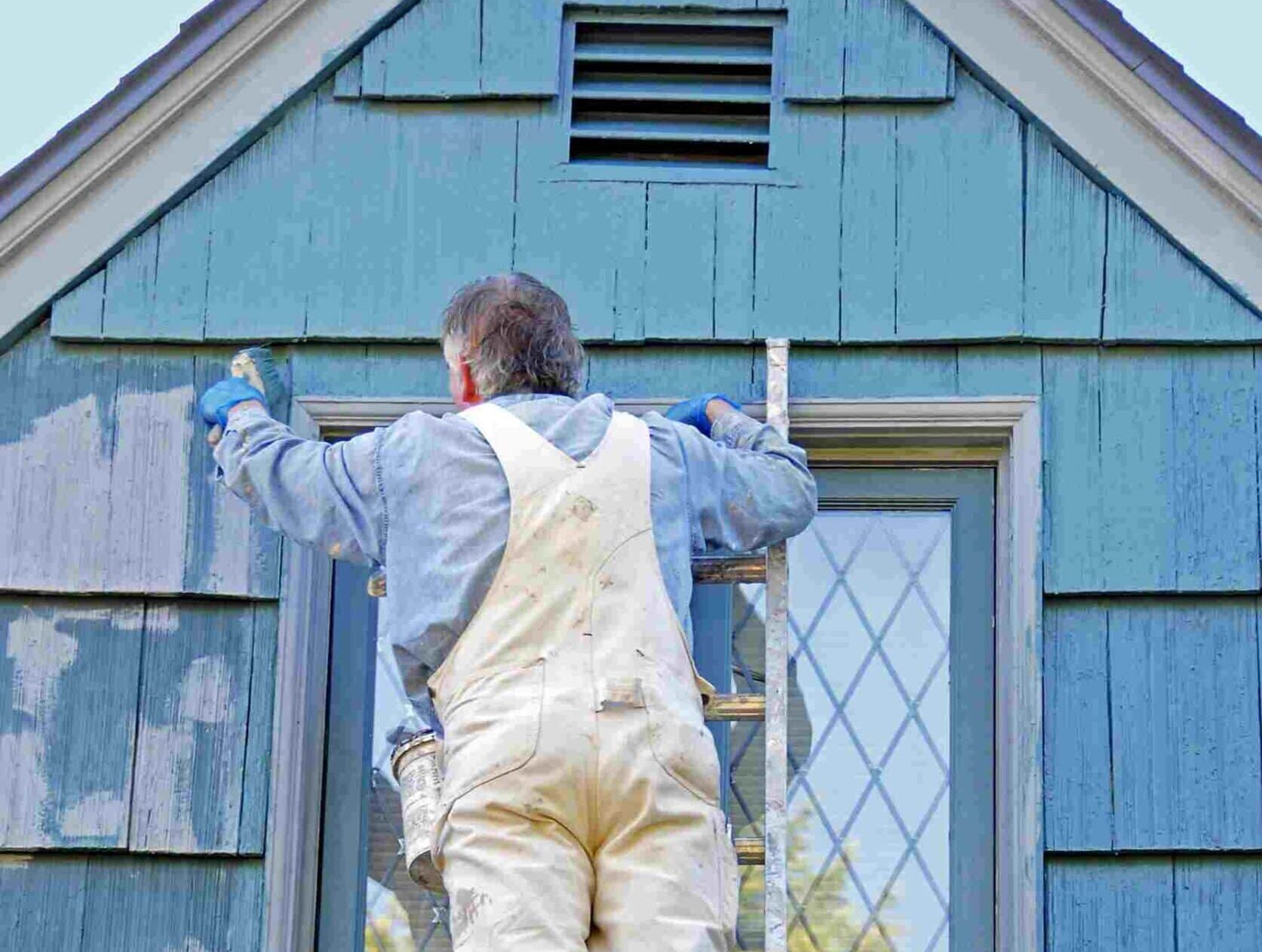
As the last of the Kansas City winter frost retreats from the bronze statues in Country Club Plaza and the redbuds begin to blush with their signature magenta across Overland Park, there is a distinct, rhythmic shift in the air. Spring in the Midwest isn’t just a change in the calendar; it’s a full-throated revival. It’s the season when we finally throw open the heavy sashes to let the scent of brewing rain and fresh-cut bluegrass drift through our hallways.
But as the sun begins to linger longer and brighter against your home’s facade, it often acts as a spotlight, revealing what the gray, muted winter skies managed to hide: your home’s “skin” is tired, weathered, and longing for renewal.
A home’s exterior is its first handshake with the world. It is the protective embrace that stands between your family and the heavy, humid Missouri summers and those biting, relentless Kansas winds that sweep across the plains. Yet, like any masterpiece exposed to the elements year after year, that protective layer eventually begins to lose its luster.
Knowing when to invest in a fresh coat of paint is about more than just maintaining a “pretty” house—it’s about stewardship. It’s about preserving the history of your property and preventing the slow creep of decay. Here is how to read the subtle and not-so-subtle signs that your home is calling for a professional touch this spring.
1. The Tale of the “Chalky” Touch
Imagine a homeowner in Brookside—let’s call her Sarah. Sarah lives in a classic 1920s colonial with deep white trim and forest green shutters. She loves the character of her neighborhood, but lately, she’s noticed something odd. Whenever her kids lean against the siding while waiting for the school bus or her dog brushes past the doorframe, they come away with a fine, chalky white powder on their clothes and fur.
This isn’t just dust from the nearby road construction; it’s a phenomenon known as “chalking.” In the painting world, chalking occurs when the paint’s binder—the “glue” that holds everything together—begins to break down due to intense UV degradation. Essentially, the Kansas sun has “cooked” the paint until the pigment releases from the surface. When you see this, the paint is no longer a sealed, protective barrier; it has become a porous layer that allows moisture to seep directly toward your home’s wooden or composite structure.
The Creative Fix: A deep, professional power wash followed by a high-quality primer and a premium acrylic sealant can transform that “chalky” ghost of a house back into the vibrant, sturdy anchor of the neighborhood.
2. The Warning of the “Alligator” Skin
Over in Lee’s Summit, a local small business owner, Mark, looks at the wooden trim of his storefront every morning before flipping the “Open” sign. Recently, he noticed the paint doesn’t just look old—it looks like scales. Small, interconnected cracks have formed across the surface, mirroring the rugged hide of an alligator.
This happens when the paint loses its vital elasticity. Our Kansas City climate is a notorious rollercoaster; surfaces expand rapidly in the 100-degree July heat and contract sharply during those sub-zero January nights. When paint can no longer “breathe” and move with the wood, it shatters on a microscopic level. Left alone, these cracks become tiny interstate highways for driving rain and melting snow, leading to wood rot that can cost thousands of dollars to replace.
The Creative Fix: Catching this early is the key to longevity. We can strip away those failing, brittle layers and apply a flexible, modern coating that moves in harmony with your building, ensuring Mark’s business looks as professional and welcoming as the service he provides inside.
3. Fading: When the “Wow” Becomes “Washout”
We’ve all seen that one house in Mission Hills or Waldo that used to be a stunning, deep navy or a rich slate gray, but now looks like a tired, dusty denim. Darker pigments are particularly susceptible to the relentless Kansas sun, which can bleach the intensity out of a color in just a few seasons.
While fading might seem like a purely cosmetic issue, it’s actually the first warning sign that the chemical bonds in your paint are weakening. When a home loses its luster, it loses its “pop”—that visual energy that makes a property feel cared for. A fresh coat of paint is like a high-definition upgrade for your property; it’s the difference between a blurred, sepia-toned photograph and a vivid, textured oil painting that catches the light just right.

4. The Silent Threat: Gaps and Failed Caulk
Take the case of a family in Olathe living in a beautiful wood-sided home near the park. During a weekend spring cleaning session, they notice that the beads of caulk around the window frames and corner boards have pulled away, leaving small, dark gaps.
In our region, these gaps are an open invitation for two things: pests and moisture. Tiny gaps are the primary entry points for everything from wood-boring insects to the “ice damming” that occurs during our winter thaws. Painting is actually 90% preparation, and a significant part of that artistry is ensuring every seam is sealed tight with high-performance elastomeric caulk. It’s the invisible shield that keeps the interior of your walls dry and your energy bills lower.
5. Bubbling and Blistering: The Moisture Trap
If you notice your paint lifting away from the surface in “bubbles” or “blisters,” you likely have a hidden moisture problem. This is a common sight in older homes in the Northland or Gladstone where moisture from the humid interior tries to escape through the walls, or where rain has found a way behind the paint film through a roof leak or a failed gutter.
Once the bond between the paint and the wood is broken, the paint will eventually peel away in large flakes, leaving the raw substrate completely exposed to the cycle of rot. Ignoring a bubble today often leads to replacing a whole plank of siding tomorrow.
6. The “Spring Cleaning” Revelation: Dirt That Won’t Budge
Sometimes, the sign isn’t a crack or a peel; it’s simply a stubbornness. If you’ve tried to wash your home this spring and find that the grime, mildew, and “graying” won’t wash away, it’s likely that the finish has become “etched.” The smooth surface of the paint has worn down, creating millions of tiny craters where Kansas City dirt and pollen can take root. A fresh application provides a new, smooth surface that sheds water and dirt, making your future maintenance a breeze.
Why Spring is the Golden Window in the Metro
In the Kansas City area, the window for a perfect paint application is precious and fleeting. We look for that “Goldilocks” zone—not too wet, not too hot, and not too cold. The mild temperatures of late April and May allow modern paints to cure slowly and evenly, creating the strongest possible molecular bond with the surface.
When you choose to refresh your exterior now, you aren’t just “painting a house.” You are applying a suit of armor for the coming year. You are choosing a color that reflects your personal style—perhaps a warm “Prairie Grass” green that blends with your landscaping or a sophisticated “River Market” gray for a modern touch—and you are ensuring that your biggest investment is protected for another decade of Midwest seasons.
Real Life Scenario: The “Neighborhood Standard”
Consider a quiet cul-de-sac in Blue Springs. Three homes were built at the same time, using the same materials. Two of those homes have been meticulously maintained with regular professional coatings and inspections. The third has been left to the elements, its paint fading into a dull, chalky yellow.
When that third homeowner decided to sell this spring to downsize, they were shocked to find their valuation was significantly lower than the recent sales on their block. The “curb appeal” isn’t just a marketing buzzword; it’s a financial reality in the KC real estate market. A fresh exterior can offer one of the highest returns on investment of any home improvement project. It signals to the world—and to potential buyers—that this home has been loved, maintained, and cherished.
Frequently Asked Questions
How often should I realistically plan for a repaint in the Kansas City area?
Due to our region’s extreme temperature swings (from -10°F to 105°F) and high summer humidity, most homes in the KC metro benefit from a professional refresh every 5 to 8 years. Wood-sided homes may need attention on the shorter end of that scale, while modern materials like stucco or fiber cement can sometimes stretch to 10 years if the initial application was of high quality.
Can I just “touch up” the areas that are peeling or bubbling?
While touch-ups can provide a temporary band-aid, they rarely blend perfectly due to the natural UV fading of the surrounding paint. More importantly, if one area is peeling, it often indicates that the entire surface’s bond is reaching the end of its functional life. A full coat ensures uniform protection and a seamless, professional aesthetic.
What is the best time of year to schedule my project?
Spring and Fall are the “peak” seasons for a reason. We look for dry days with temperatures consistently between 50 and 85 degrees. Scheduling in early spring ensures you beat the brutal summer humidity, which can sometimes interfere with the drying process and lead to surfactant leaching (those “waxy” streaks you sometimes see on new paint).
Your Home’s Next Chapter Starts Here
At the end of the day, a home is more than just a collection of boards, nails, and shingles. It’s the backdrop for your family’s slow Saturday morning pancakes, the sanctuary you return to after a long commute on I-435, and the place where memories are etched into the very walls. Your home deserves to look as vibrant and resilient as the life happening inside it.
This spring, don’t just settle for “good enough.” Choose a finish that glows under the Missouri sun and stands defiant against the Kansas wind. Let’s work together to pick a palette that sings and a finish that lasts.
Ready to Bring Your Home Back to Life?
Our team is dedicated to the artistry of protection. We don’t just slap on a coat of color; we meticulously prepare, seal, and transform your property using the finest materials and a true craftsman’s eye for detail. Whether you are looking to modernize your retail space or restore the historical charm of your residence, we are here to help you turn your vision into a stunning reality.