
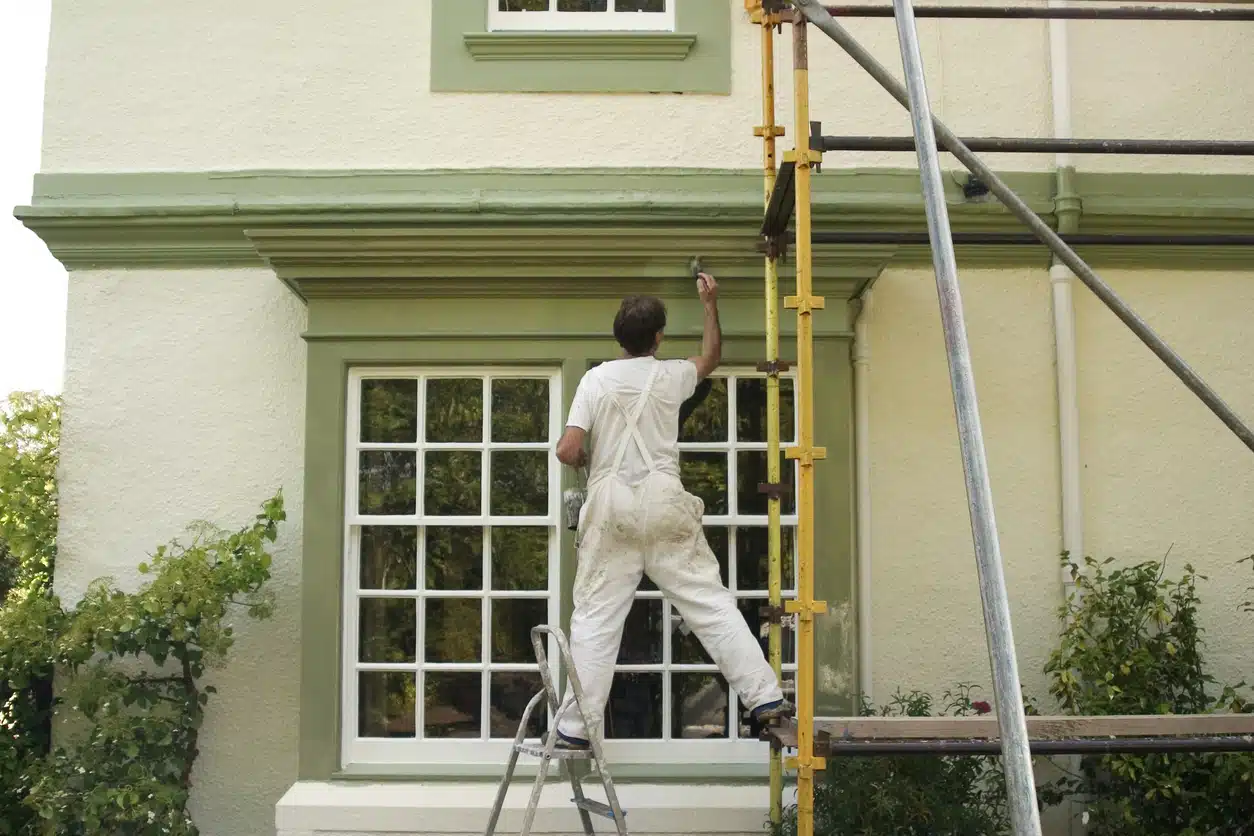
If there is one thing we all collectively agree on in the Midwest, it is the absolute, soul-soothing relief that arrives when the calendar flips to autumn. The stifling, relentless heat of August finally packs its bags, the oppressive humidity stops making us sweat just from looking out the window, and the air turns remarkably crisp. Suddenly, there is the faint, distinct smell of woodsmoke mingling with barbecue, the leaves on the grand oaks of our neighborhoods start showing off their vibrant golds and crimsons, and football takes over our weekends. It is, without a doubt, the most glorious time of the year in the metro.
But while you are pulling your favorite flannel out of storage and sipping heavily spiced cider on the porch, take a long, hard look at your home’s siding, trim, and fascia. Does it look a little tired? Did the brutal summer sun bake the life out of your color? Are there tiny cracks forming near the windowsills?
If so, you are currently sitting in the absolute perfect, and final, sweet spot of the year to address it. Autumn is Mother Nature’s ultimate gift to homeowners looking to protect their investment, but the clock is ticking loudly. Once the icy grip of winter takes hold, the opportunity vanishes entirely until the spring thaw.
Here at Bates Painting, we want to help you take advantage of this golden season. But why, exactly, is autumn the undeniable champion for updating your home’s facade? Let’s break down the science, the logic, and the aesthetics of why this season is the final, fleeting window of opportunity.
Seasonal Painting Snapshot: Why Autumn Takes the Crown
Before diving into the detailed reasons, here is how the seasons stack up against each other when it comes to applying a long-lasting, durable protective coat:
| Environmental Factor | Summer | Autumn (The Sweet Spot) | Winter |
| Temperature | Blistering heat causes fast evaporation (“flash drying”) | Ideal range (50°F – 75°F) for perfect curing | Freezing temps cause clumping or ice crystals in wet paint |
| Humidity Levels | Heavy, stifling humidity traps moisture under paint | Crisp, low humidity promotes smooth, even drying | Low humidity, but air is too cold for resin cohesion |
| Insect Activity | Swarming bugs land and freeze in wet coatings | Dormant pests leave fresh surfaces pristine | Zero bugs, but ambient conditions prevent application |
| Foliage & Access | Overgrown shrubs and dense bushes block perimeter access | Foliage dies back, providing a clear workspace | Bare yards, but snowdrifts hamper equipment setup |
| Home Protection | Prepares for sun, but leaves home exposed to winter | Seals micro-cracks before damaging freeze-thaw cycles | Late to protect; winter moisture is already causing rot |
Reason #1: The Goldilocks Zone of Temperature
To understand why autumn is the undisputed king of the calendar for this type of home improvement, we have to talk a little bit about chemistry. The high-quality acrylic latex materials we use at Bates Painting are incredibly durable once fully cured, but they are incredibly picky while they are wet.
Think of a fresh coat like a delicate soufflé. It requires the perfect environment to set up properly. During the blistering peak of July, when the thermometer is flirting with 100 degrees and the sun is beating directly onto your siding, the moisture in the product evaporates much too quickly. We call this “flash drying.” When this happens, the binders and resins don’t have enough time to properly coalesce and grip the surface of your home. The result? A weak bond that is prone to peeling, blistering, and early failure.
Conversely, when the bitter winter arrives and temperatures plummet into the twenties, the exact opposite problem occurs. The freezing temperatures prevent the moisture from evaporating at all. The application becomes a clumpy, sluggish mess that refuses to cure, and if the temperature drops below freezing before the coat is dry, ice crystals can actually form inside the wet layer, completely destroying its structural integrity.
Autumn provides the magical “Goldilocks Zone.” It is not too hot. It is not too cold. It is just right. With daytime temperatures comfortably cruising between 50 and 75 degrees, the chemical process of drying and curing happens at the exact, methodical pace the manufacturer intended. The resins bond tightly to the wood, stucco, or siding, creating a flawless, rock-hard barrier that will look beautiful for years.
Reason #2: Humidity Takes a Much-Needed Hike
If you have survived a July in the Midwest, you know that the air can sometimes feel thick enough to cut with a butter knife. The humidity is legendary, turning the outdoors into a veritable swamp.
While high humidity is great for tropical ferns, it is absolute kryptonite for a fresh coat on your home. When the air is completely saturated with moisture, it leaves nowhere for the water in the wet product to go. The curing process stalls out. Even worse, if there is a massive amount of moisture in the air, condensation can form on the freshly applied surface before it has a chance to dry, leading to a dull finish, streaks, or the dreaded “surfactant leaching”—where soapy-looking streaks run down the side of your freshly updated house.
Fall brings massive atmospheric relief. The cold fronts pushing down from Canada sweep away that soupy, tropical air, replacing it with crisp, dry breezes. Lower humidity means faster, more even drying times. It ensures that the color sets true, the finish remains pristine, and the protective barrier forms without any trapped moisture trying to escape from underneath and causing future blisters.
Reason #3: The Ultimate Shield Before the Winter Assault
Winter in our region is not just cold; it is downright aggressive. We cycle brutally through freezing rain, heavy snowfall, and sudden sunny thaws, only to freeze solid again by nightfall. This constant freeze-thaw cycle is the natural enemy of any wooden structure.
If your home’s exterior currently has peeling, cracking, or exposed bare wood, leaving it exposed to the winter elements is a recipe for disaster. Moisture from snow and ice will seep into those tiny fissures. When the temperature drops overnight, that trapped water freezes and expands, widening the cracks. By spring, what was once a minor cosmetic issue could easily turn into structural wood rot, requiring expensive carpentry repairs before any aesthetic work can even begin.
A flawless, fresh coat applied in the fall acts as a heavy-duty raincoat for your house. It seals up those microscopic cracks, covers the bare spots, and provides an impenetrable, waterproof shield against the snowdrifts and freezing rain. You can sit by the fireplace all winter, sipping hot cocoa, with the ultimate peace of mind knowing your biggest investment is wrapped in a protective, weatherproof armor.
Reason #4: The Surrender of the Flora and Fauna
There are two hidden logistical nightmares that homeowners rarely think about during summer home improvement projects: overgrown bushes and suicidal insects.
By mid-August, the landscaping around most homes has exploded. Hostas are massive, climbing vines have taken over trellises, and the foundation shrubs are at their absolute peak of bushiness. This makes accessing the siding and trim incredibly difficult for our crew. We have to gingerly work around your prize-winning hydrangeas, which slows down the process and risks accidental damage to your garden. In the fall, however, the foliage begins to naturally die back and enter dormancy. Shrubs are trimmed down, perennials are put to bed, and the perimeter of the house becomes an easily navigable workspace, allowing for faster, more precise application.
Then, there are the bugs. Summer is a buzzing, swarming symphony of gnats, mosquitoes, June bugs, and wasps. There is nothing more tragic than laying down a spectacularly smooth, flawless stroke of a beautiful charcoal gray, only to have a kamikaze moth fly directly into it and fossilize itself in the wet finish. The cool autumn nights send these pesky uninvited guests into hibernation, leaving the air clear and your pristine new walls completely bug-free.
Reason #5: Securing Maximum Curb Appeal Before the Holiday Hustle
Let’s be honest for a second: the holidays are stressful enough without worrying about whether your mother-in-law is silently judging the peeling trim around your front door.
Starting in November, the season of hosting begins. Thanksgiving dinners, neighborhood holiday parties, and family gatherings mean more people will be walking up to your front porch over a six-week period than the rest of the year combined. Plus, you are likely going to be hanging holiday lights and wreaths. Nothing makes festive string lights pop quite like a crisp, freshly updated backdrop.
Using this autumn window to revitalize your home’s appearance means you get to play the role of the proud host. You elevate your curb appeal right before the most socially active time of the year. Instead of apologizing for the weathered state of your siding, you will be fielding compliments from relatives and neighbors before they even step through the front door.
Reason #6: The Psychological Comfort of the “Finished List”
There is an undeniable, heavy mental toll that comes with looking at a massive, uncompleted chore every time you pull into your driveway. All summer long, you might have been saying, “I need to get that taken care of.” But then there were vacations, pool days, and back-to-school preparations. Life simply gets in the way.
By taking action now, you get to check the most significant maintenance item off your to-do list before the year ends. It is incredibly satisfying to enter the cozy, restorative months of winter without the nagging guilt of deferred maintenance hanging over your head. You start the new year with a clean slate and a beautiful home, rather than carrying this year’s chores into next spring’s chaotic schedule.
Reason #7: The Final Closing of the Calendar
The most urgent reason why autumn is the final window is simply a matter of physics and time. The clock is running out.
Once late November rolls around and the frost becomes a permanent morning fixture, the window slams completely shut. Reputable professionals will simply not risk applying wet product in freezing conditions because the failure rate is virtually 100%. If you miss this brief, spectacular autumn opportunity, you are stuck waiting until April or May of next year to even get on a schedule. By then, another brutal winter has battered your exposed wood, potentially raising the cost and complexity of the preparation work.
The time to act isn’t when the snow starts flying; the time to act is right now, while the leaves are turning and the air is crisp.
The Bates Painting Standard
At Bates Painting, we have spent years mastering the unpredictable mood swings of Midwest weather. We know exactly how to read the dew point, track the ambient temperatures, and maximize this beautiful autumn stretch to deliver a flawless, enduring finish for your home. We aren’t just slapping color on a wall; we are applying a highly engineered protective coating that requires precise environmental conditions and expert application techniques to perform at its absolute best.
Our team takes immense pride in our meticulous preparation, our commitment to using only ultra-premium materials, and our dedication to leaving your property looking better than we found it. We treat every single home as if it were our own, ensuring that when the first blizzard of the year finally howls through the metro, you are safe, secure, and looking fantastic.
The vibrant colors of fall won’t last forever, and neither will this perfect weather window. Do not let another harsh winter abuse your home’s exterior. It is time to seal, protect, and beautify your biggest investment before the frost sets in for good.
Ready to make your neighbors jealous and armor your home against the incoming freeze? Let the dedicated professionals at Bates Painting handle the heavy lifting while you enjoy the football game. We are booking our final slots for the season right now, and they vanish as quickly as the autumn leaves. Discover the difference true craftsmanship makes and explore exactly how we can transform your property by visiting our dedicated service page: Learn More About Our Comprehensive Exterior Painting Process Here.
Reach out today, and let’s give your home the beautiful, resilient finish it deserves before the winter winds begin to blow!
Frequently Asked Questions
Q1: How cold is too cold for an autumn outdoor coating application?
While traditional coatings require temperatures above 50°F, modern high-grade acrylic formulations can set properly in temperatures as low as 35°F to 40°F. However, the critical factor is ensuring daytime temperatures stay comfortably above freezing for at least 24 to 48 hours so the finish cures completely. Our team closely monitors local weather patterns to guarantee every application occurs during an optimal temperature window.
Q2: What happens if an unexpected autumn rainstorm hits while the job is in progress?
Rain on fresh, wet surfaces can cause wash-offs or surface streaking. That is why weather tracking is a core part of our process. High-end materials usually become rain-resistant within 2 to 4 hours of application under autumn’s low-humidity conditions. We only apply product when clear, dry radar windows are confirmed.
Q3: How far into the fall season can I schedule my project with Bates Painting?
Our autumn calendar typically stays open through late October or early November, depending on how quickly winter weather arrives in the region. Because weather conditions can shift rapidly, our fall slots fill up fast. We recommend booking your consultation as early in the season as possible to secure your spot before overnight freezes set in.